

Wall Graphics in a Hospital: Questions to Ask Before Installation
Can you put wall graphics in a hospital? Yes. Hospitals often install them in lobbies, corridors, waiting rooms, and patient areas. The harder question is who has to approve them.
If you manage the facility, run the renovation, design the interiors, or lead patient experience, that approval lands on you. Infection prevention, life safety, and brand teams all have a stake. A graphic that looks right can still fail a cleaning test, a fire inspection, or an infection control review.
This guide gives you the questions to ask, in the order a project usually raises them. It ends with a checklist for your vendor meeting. It raises questions and does not give code advice. Requirements vary by state, code edition, and your facility's authorities, and those authorities decide.
Where in the Building Will the Graphics Go?
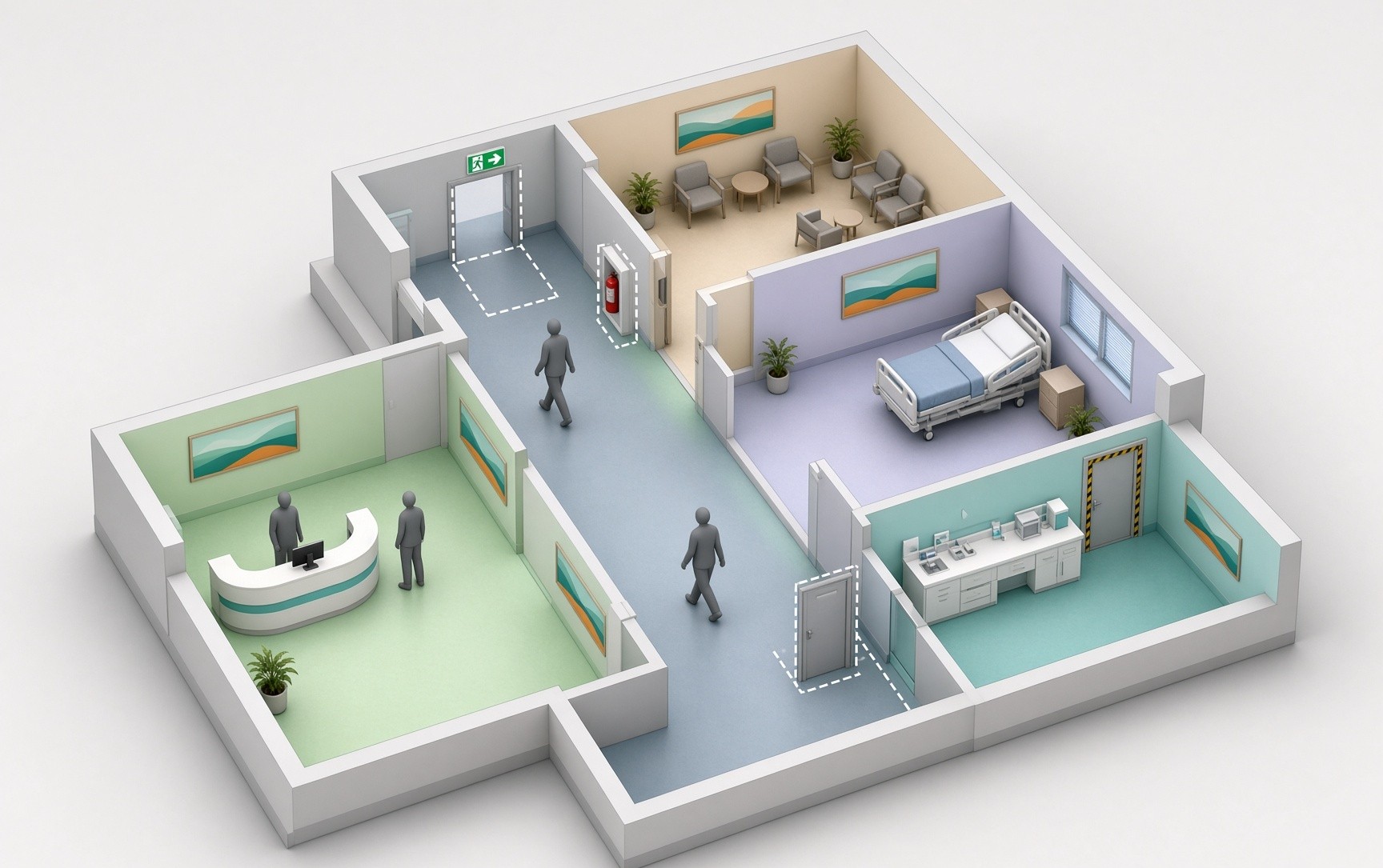
Start with the floor plan. Public areas, corridors, waiting rooms, patient rooms, and clinical zones are different environments, and the rules differ by area.
A lobby wall faces different questions than a wall inside a patient room. Corridors deserve extra attention because they are part of the egress route. One state fire marshal's guidance for healthcare facilities says decorations should not go on required fire doors. It also warns against blocking the view of exit signs, pull stations, emergency lighting, ng and fire extinguishers.
Before you talk to any vendor, answer these:
- Which walls, and how much of each wall?
- Which areas are patient-facing, and which are clinical?
- Are there fire doors, exit signs, or equipment on or near the walls?
What Is the Graphic Made Of, and What Has It Been Tested For?
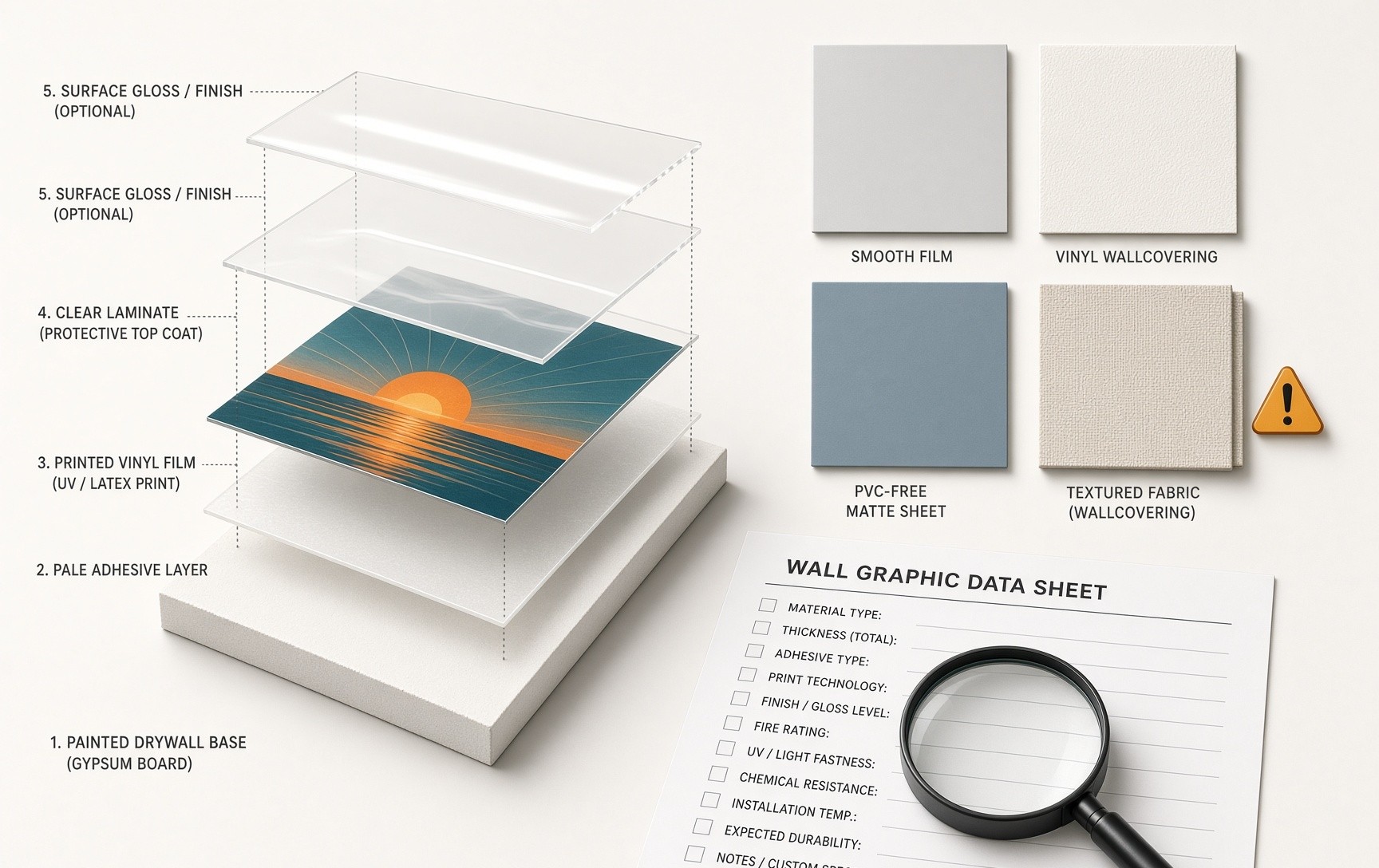
A wall graphic is a stack of layers: a face material, ink, often a laminate, and an adhesive. Each layer affects cleaning, fire performance, and removal.
Common material families include printed self-adhesive film, vinyl wallcovering, PVC-free wallcovering, and fabric-based or textured materials. Textured and fabric-based products need extra care. One installer reports being told that fabric-based products were not allowed in a hospital. The reason given was that they could not be wiped with disinfectant. Deep texture can also be harder to wipe clean. Your facility may have its own rule, so ask.
Then ask for the data sheet. Read these lines:
- Fire test results for the product as adhered to a wall
- A cleaning code or chemical guidance
- Emissions or health product information
- The adhesive's safety data sheet
Treat the word "antimicrobial" with care. It does not mean the product survives your disinfectants. One wallcovering maker says its protective film is not antimicrobial but can be cleaned with a wide range of disinfectants. If a vendor claims antimicrobial performance, ask what test was used and what it measured.
Our custom environments page shows the range of environmental graphics we produce.
Can It Be Cleaned With the Disinfectants This Hospital Uses?
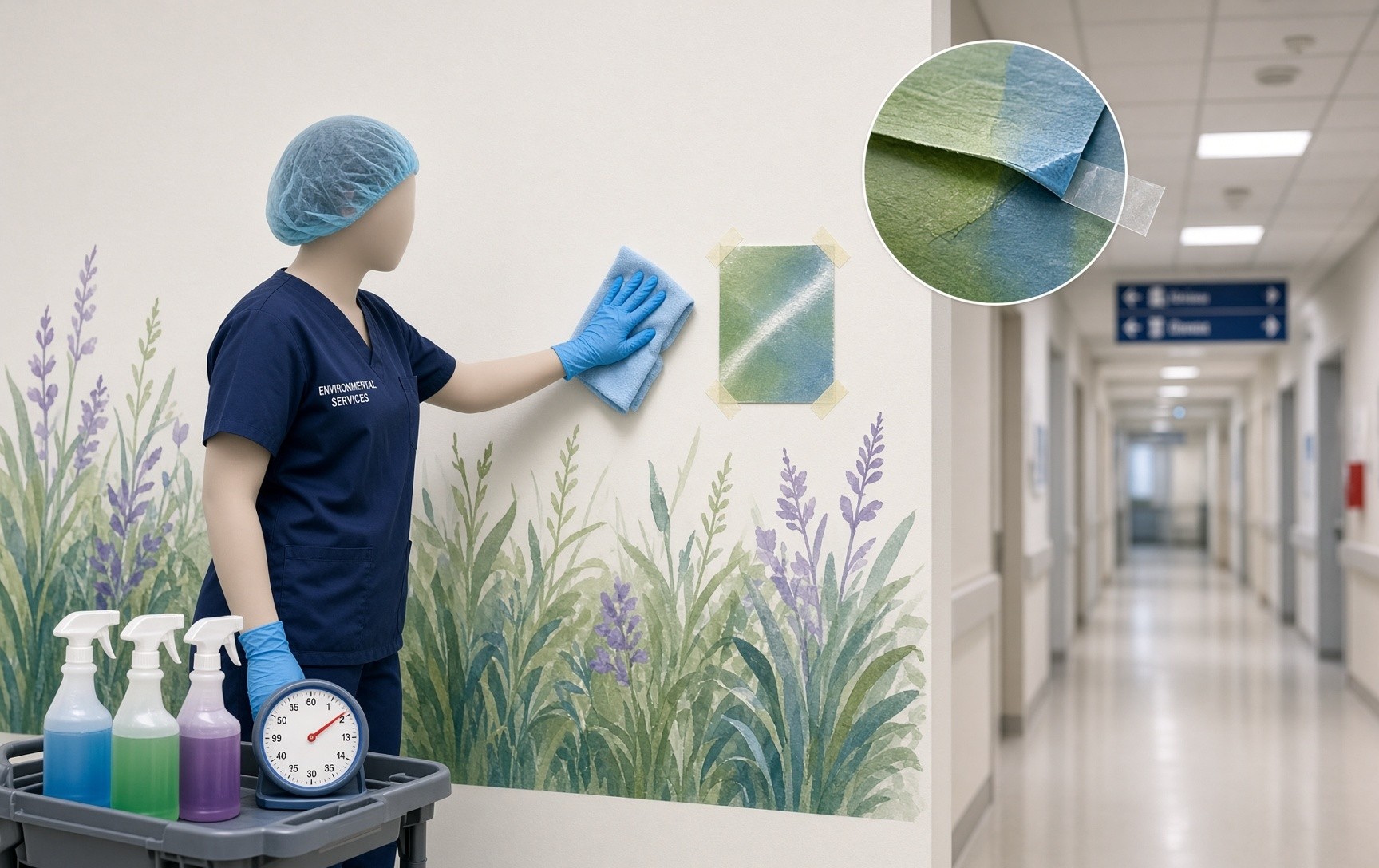
Get your approved chemical list first. Include each product's contact time, because a disinfectant needs to stay wet on the surface for the time on its label.
Then ask the vendor to match that list against the manufacturer's cleaning guidance. Resistance depends on the film and laminate. Alcohol and diluted bleach are common disinfectants that typical graphics films generally handle well. Ammonia can attack adhesive. The overlaminate largely sets how much chemical exposure the graphic can take.
Check edges and seams too. Cleaning can lift them over time, and reseal products exist for that. Find out how the vendor would handle a lifting edge after six months of daily wiping.
The best test is a sample. Ask to wipe a sample with the products your environmental services team actually uses before the full order goes in.
What Fire Rating Is Required, and Who Decides?
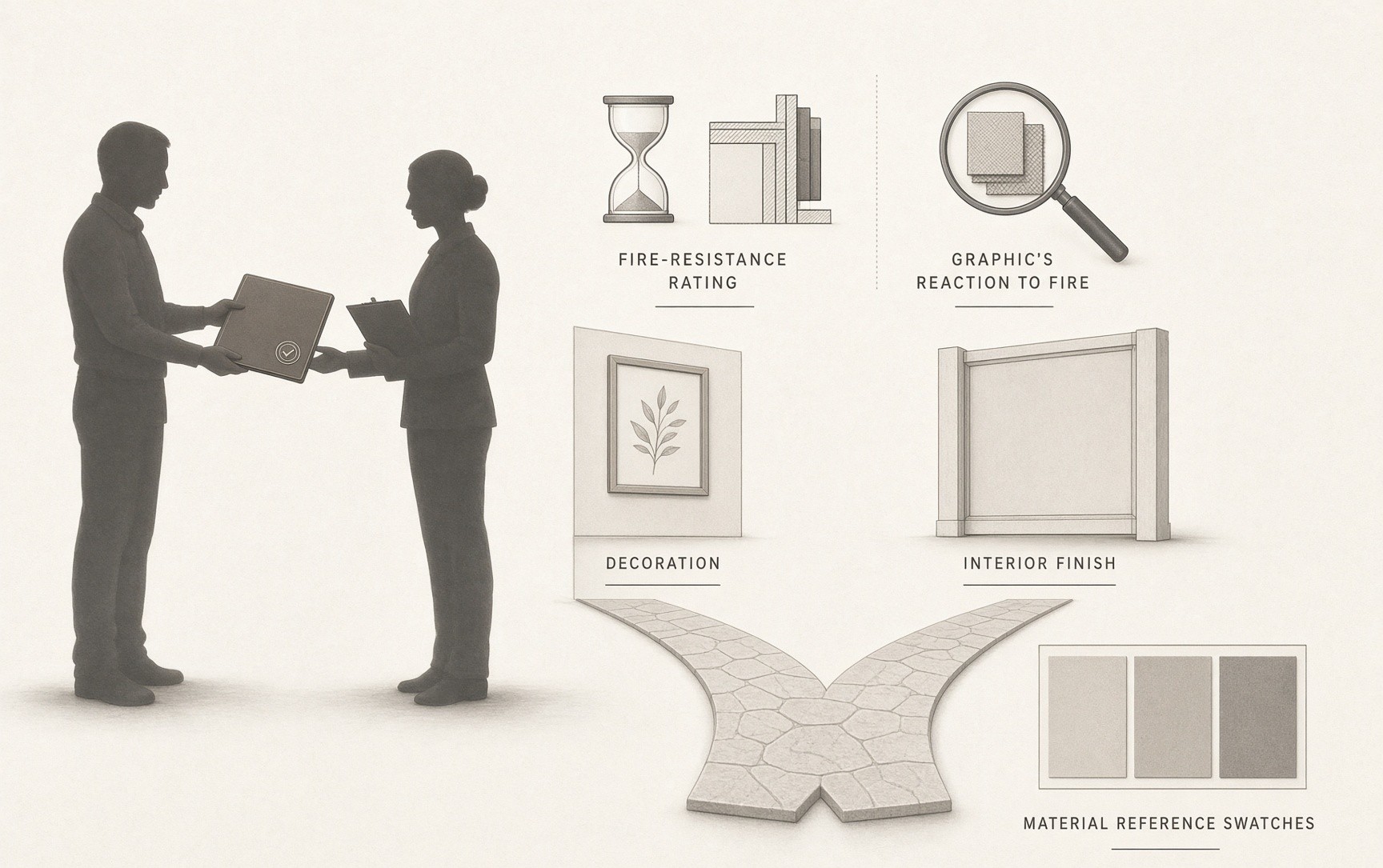
People ask this question loosely, because "fire rating" can mean two things. One is the fire-resistance rating of a wall or door, measured in hours. The other is how the graphic itself reacts to fire. Interior finish is classed A, B, or C by flame spread. Class A means a flame spread index of 0 to 25 and a smoke developed index of 0 to 450.
Hospitals that take Medicare or Medicaid are surveyed against the 2012 edition of NFPA 101, the Life Safety Code. That code prohibits combustible decorations in healthcare occupancies unless they meet one of several conditions. Examples include passing the NFPA 701 flame test or being limited in quantity. Some model codes also treat decorative coverings on 10% or more of a wall as interior finish. Coverage limits, written as a percentage of wall area, also exist. They vary with sprinkler protection and room type.
So the question for your team is how your authority will classify the graphic. Decoration rules and interior finish rules differ. The classification is not the vendor's decision. The authority having jurisdiction, working with your hospital's life safety team, makes the decision. Some states add their own rules.
The vendor can provide documentation. Request the test reports for the exact product. Confirm that the results apply to the product as adhered to your wall type.
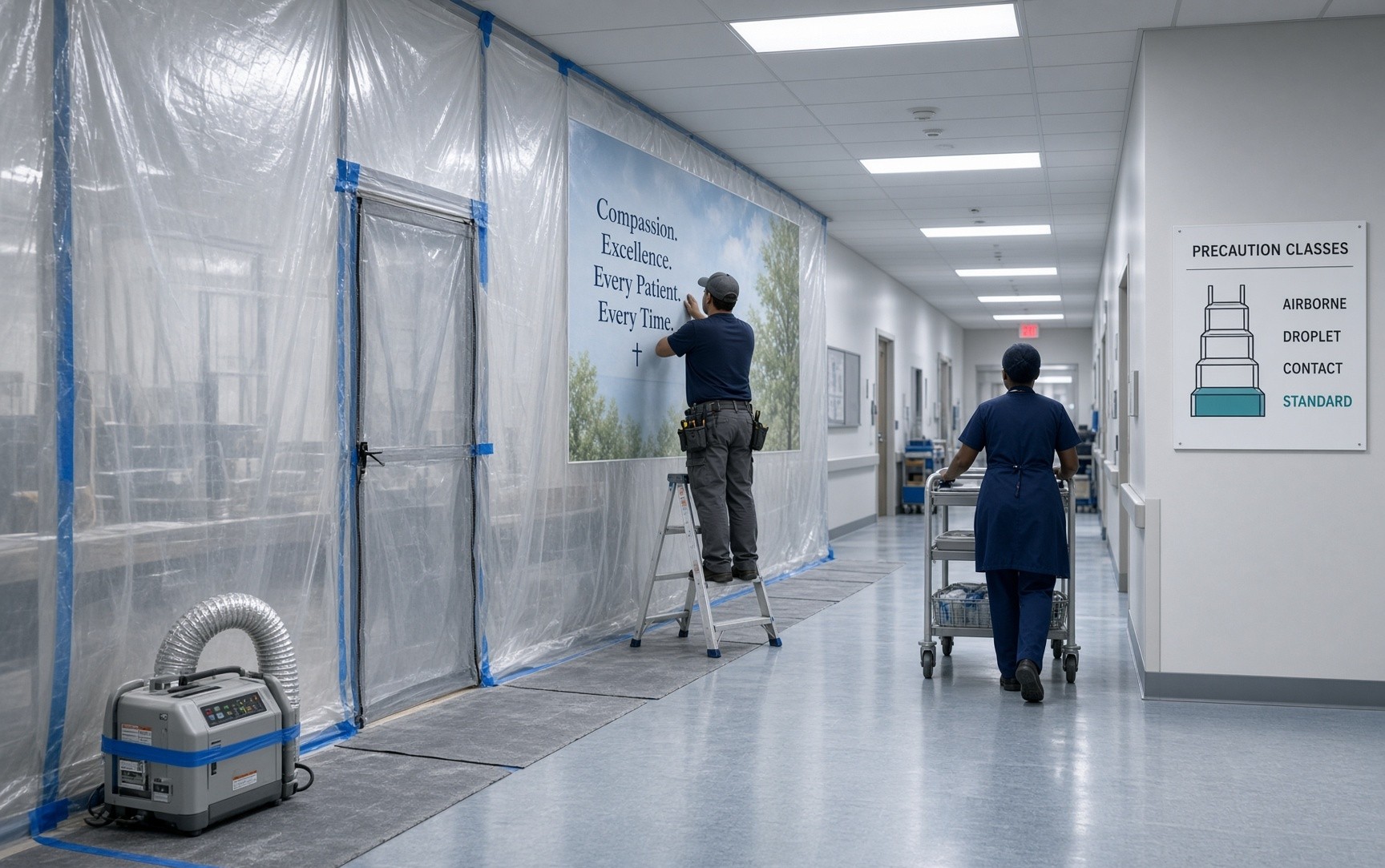
How Will Installation Work in an Occupied Space?
An occupied hospital changes how installation works.
What Is an Infection Control Risk Assessment?
An infection control risk assessment, or ICRA, is a planning step required before construction, renovation, or maintenance work. A Joint Commission standard requires hospitals to assess infection control, air quality, noise, and other hazards before such work. The assessment crosses the type of work with the risk group of nearby patients. The result is a class of precautions, and the higher classes need formal permit sign-off. Your infection preventionist leads the process.
Wall graphics can sit at the low end. In the common matrix, wall covering that creates no dust is a low-level activity. Three things can raise it: sanding or patching walls, work that cannot finish in one shift, and newer ICRA guidance that treats patient care areas as high risk. If the scope changes mid-project, the assessment has to be redone. Ask your infection preventionist to classify the project before you set a schedule.
Access, Vetting and Timing
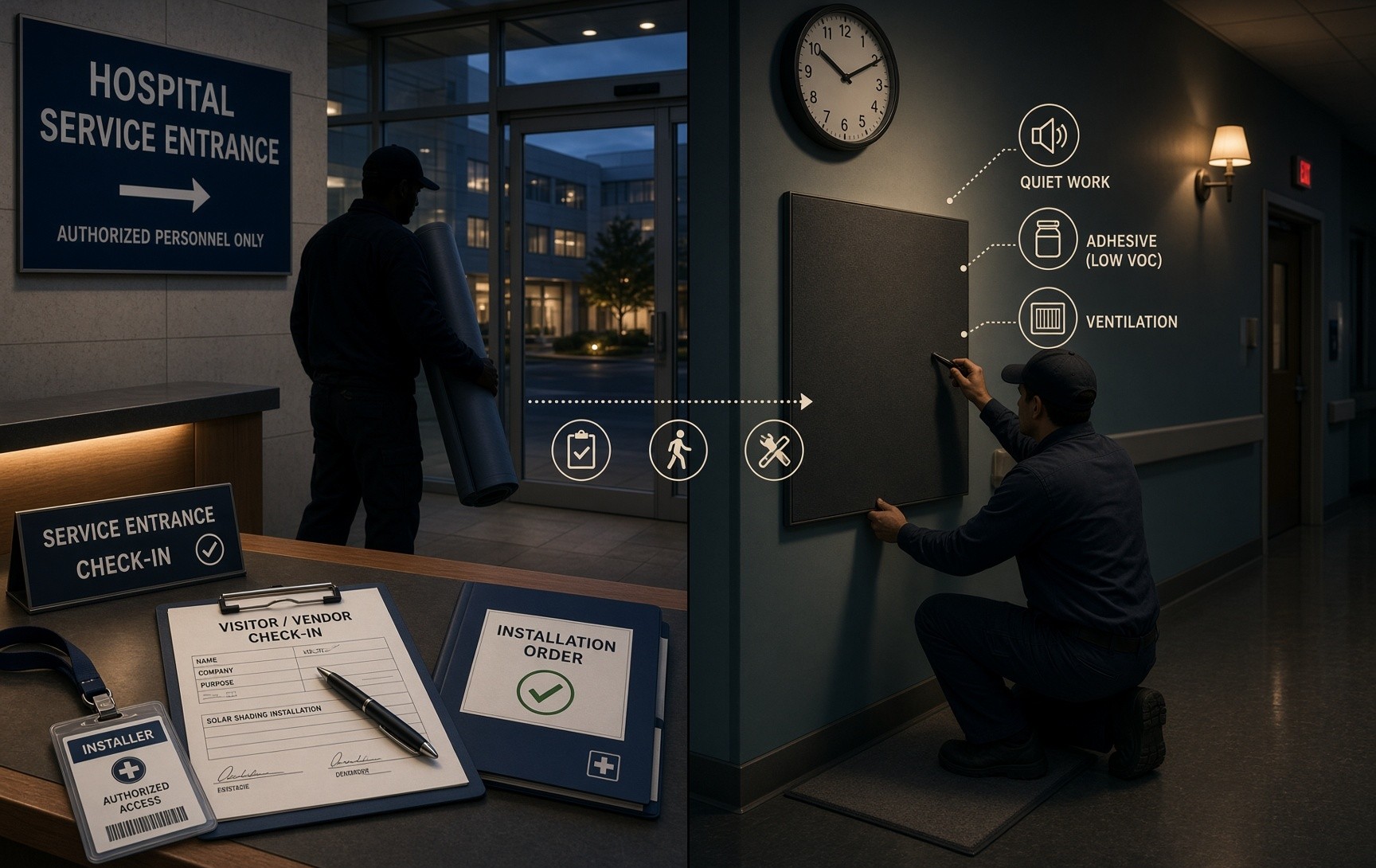
Many hospitals require installers to complete orientation and obtain an ID badge. Some also ask for immunization records and safety data sheets for products brought on site. After-hours work often needs its own permit.
Consider the practical effects too: dust from wall prep, noise, and adhesive odor. Start with the adhesive's safety data sheet for odor. Then confirm which units are occupied and what times work is allowed.
Building or sign permits may also apply. Our permit and installation services page covers how that part is handled.
How Does It Fit With Wayfinding and Brand Standards?
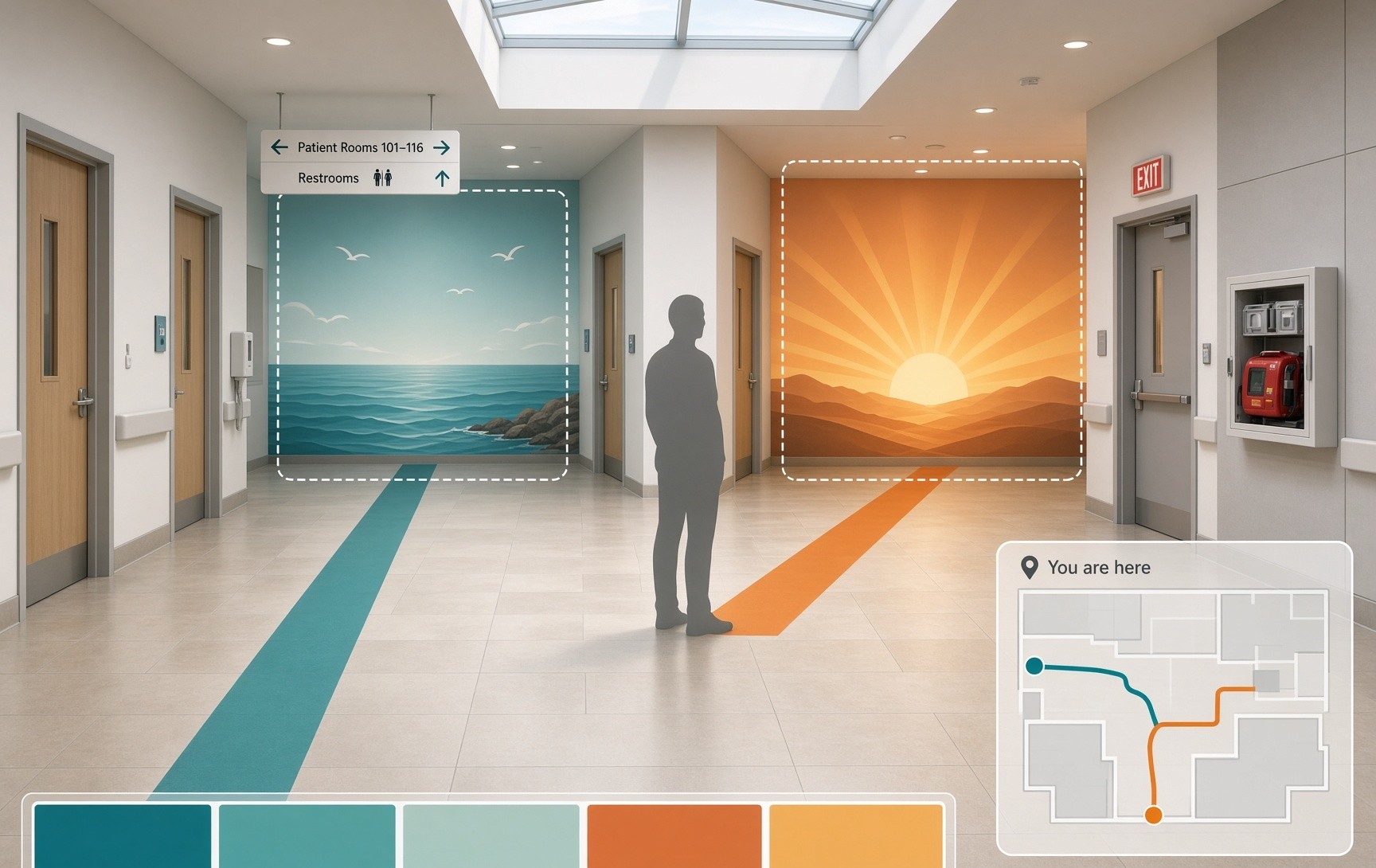
Most hospitals already have rules for naming, color, and symbols. Hospital wayfinding design follows those rules at every decision point. Hospital wayfinding works best when graphics support the plan. One large health system's signage standard expects graphics and artwork to follow the facility's wayfinding plan. It also says signs alone are not enough.
Get the hospital's brand and wayfinding standards before design starts. Then check the layout against safety. Graphics should not block exit signs, door frames, or emergency equipment.
What Happens When You Need to Change It?
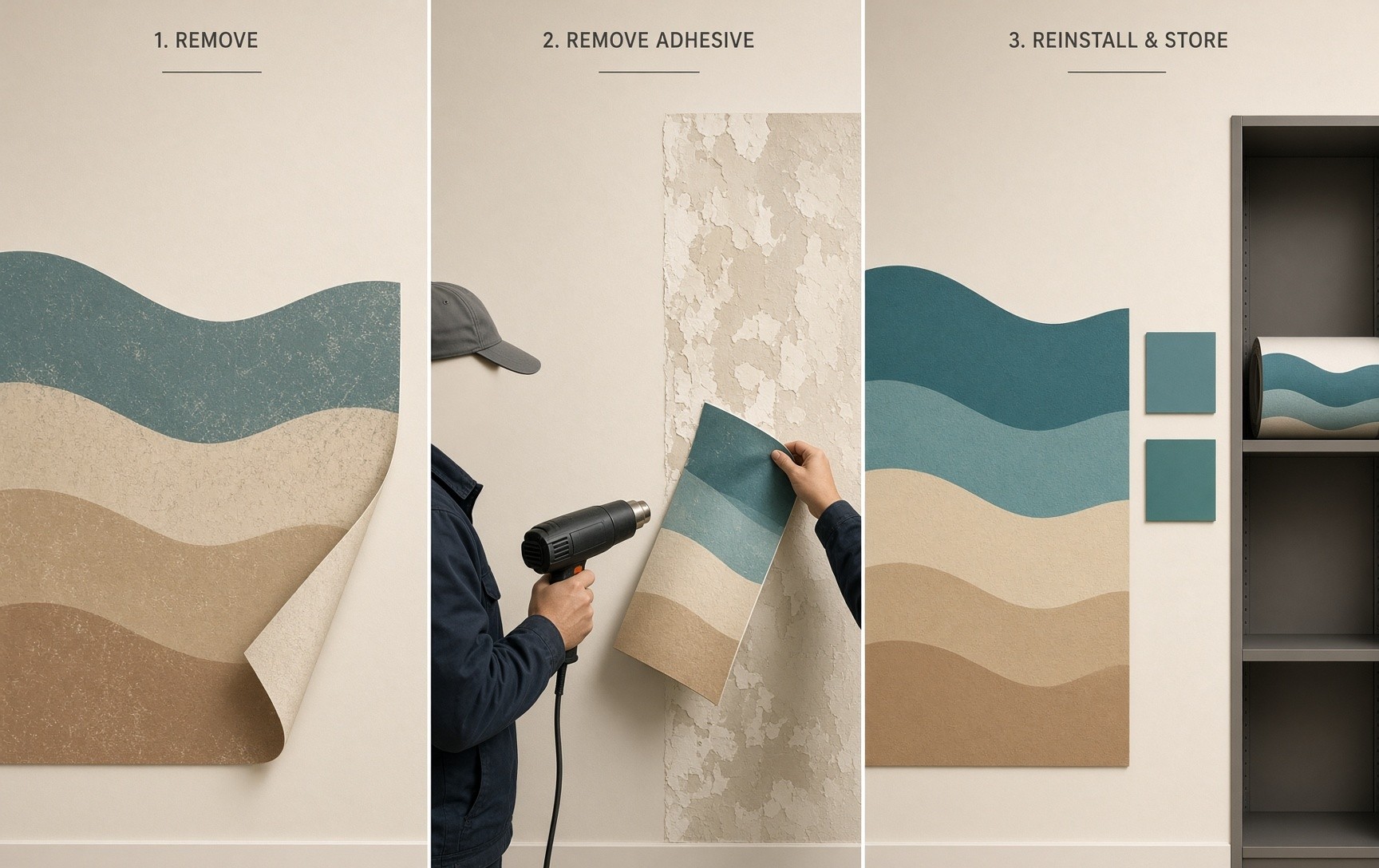
Every graphic gets removed or replaced eventually. Ask about that now.
Removal depends on how long the graphic has been up, the wall finish, and UV exposure. Heat softens the adhesive. Paint damage is a real possibility, so ask who repairs and repaints the wall and put the answer in the contract. Some films use removable adhesives for short-term use. The wall matters too. Several installers say flat paint can cause adhesion failures, so check the paint finish.
Reprints raise a different problem. Some installers have noted that a perfect color match on later panels cannot be guaranteed. Ask the vendor to keep your files, color profiles, and media records. Consider keeping spare panels.
Who Needs to Sign Off?

Approvals vary by facility. A typical list:
- Facilities or engineering
- Infection prevention
- Life safety or fire safety, and the authority having jurisdiction where required
- Nursing leadership, for occupied units
- Patient experience
- Brand or marketing
- Environmental services, for cleaning products and procedures
Ask each group what they need to see and when. Starting with the full list avoids a late stop.
Checklist for the Vendor Meeting
Bring this to the first meeting.
Documents to request
- Product data sheet for every layer
- Fire test reports for the exact product, as adhered
- Manufacturer cleaning and chemical guidance
- Adhesive safety data sheet
- Proof of installer orientation, badging, and immunization records, if required
Questions to ask
- Which walls, and how much of each?
- How will the authority classify the graphic?
- Which disinfectants does the hospital use, and has a sample been tested?
- What ICRA class does infection prevention assign?
- What hours, access, and noise rules apply?
- Who removes, repairs, and repaints?
- How are reprints matched?
Frequently Asked Questions
Can you put wall graphics in a hospital?
Yes, hospitals commonly install them. Approval depends on the facility's infection prevention, life safety, and facilities teams, as well as the authority having jurisdiction. Start with the questions above.
What vinyl is used for hospital walls?
There is no single answer. Common options include printed self-adhesive film, vinyl wallcovering, and PVC-free wallcovering. Choose by data sheet: fire test results, cleaning guidance, and emissions information. Then confirm with your life safety and infection prevention teams.
Can hospital murals be cleaned with disinfectant?
Often yes, but it depends on the film, laminate, and adhesive. Compare the hospital's approved chemical list and contact times with the manufacturer's cleaning guidance, and test a sample.
What fire rating do hospital wall graphics need?
Your authority having jurisdiction and life safety team decide. Hospitals are surveyed against the 2012 edition of NFPA 101. The key question is how the graphic is classified, because decoration rules and interior finish rules differ. Ask the vendor for test reports for the exact product.
What is an infection control risk assessment for installing wall graphics?
It sets precautions for work in a healthcare facility based on the type of work and nearby patient risk. Wall coverings that create no dust are low-level, but wall prep or multi-shift work can raise the risk. Your infection preventionist sets the class.

Add a comment